
The Reserve Bank of India's Monetary Policy Committee (MPC) has commenced its three-day meeting, with a majority of economists and bankers anticipating a 25 basis point rate hike to counter escalating inflation risks, particularly from West Asia conflicts.

India is hosting the BRICS summit, leveraging the platform to address global trade tensions and champion the developmental priorities of the Global South, including food, energy, and supply chain security. The summit, attended by leaders like President Xi Jinping and Vladimir Putin, will focus on resilience, innovation, cooperation, and sustainability, with India aiming to strengthen intra-BRICS collaboration and discuss global matters. The expanded BRICS grouping represents a significant portion of the world's population and GDP, making its discussions crucial for global economic stability.

India's electric two-wheeler market has seen record penetration, exceeding 11.2 per cent, driven by crude oil price fluctuations. This surge has led to an unexpected crisis for Indian OEMs, with unfulfilled customer demand reaching 20-30 per cent and average waiting periods exceeding four weeks, a situation expected to intensify during the upcoming festival season.

The Reserve Bank of India's 25-basis point increase in the repo rate to 5.5 per cent is expected to exert pressure on housing affordability and buyer sentiment, particularly affecting interest rate-sensitive segments and potentially moderating sales during the crucial festival season.

Rajasthan Governor Haribhau Bagde highlighted ethanol's potential to protect India from volatile petroleum markets and geopolitical risks, advocating for its widespread production and use. He, along with other officials, emphasised ethanol's role in strengthening the rural economy, ensuring timely cane payments, and combating carbon emissions, while also discussing its historical context and current government support.

'While the population remains relatively young, its age structure is beginning to shift, setting the stage for a much older population later this century.'

Indian benchmark equity indices, Sensex and Nifty, experienced declines in early trade due to renewed tensions in West Asia, which led to a rebound in crude oil prices, coupled with weak global market trends and foreign fund outflows.
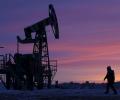
Oil prices are expected to remain elevated due to disruptions in the Strait of Hormuz, with both the US Energy Information Administration (EIA) and Rabobank International forecasting firm prices and a potential surge above $100 a barrel if disruptions worsen.

Foreign investors have aggressively sold off Indian equities, withdrawing over 48,213 crore in the first 10 days of April, following a record 1.17 lakh crore outflow in March, driven by escalating geopolitical tensions in West Asia, rising crude oil prices, and global inflation concerns.

Indian benchmark indices Sensex and Nifty experienced a significant slump in early trade, mirroring a bearish trend in global equities, as escalating conflict in West Asia drove up crude oil prices and intensified investor concerns.

Reliance Industries Ltd (RIL) has successfully raised a total of Rs 25,000 crore through domestic bond issues in September, including a recent Rs 13,000 crore 10-year bond at 7.90 per cent, as it prioritises funding certainty amidst expectations of a possible RBI rate hike and rising borrowing costs.

Tata Motors is set to acquire Italy's Iveco Group, a strategic move aimed at propelling the Indian automaker into the top four global commercial vehicle (CV) manufacturers, with projected annual revenues of $35 billion-$40 billion within five years.

Infosys Senior Vice President Vikram Meghal stated that India is experiencing a significant demand window in the semiconductor market and must evolve from merely engineering products to inventing complete systems. He highlighted the massive shifts driven by AI and supply chain challenges, urging a focus on "Invent in India" to capture higher value and leverage decades of investment in the ecosystem.

Senior Congress leader Shashi Tharoor has articulated India's position on BRICS, advocating for it to be a "non-West, but not anti-West" platform, a stance he believes is crucial for India's national interest. He highlighted the prestige of hosting the BRICS summit, India's responsibility to represent the Global South, and the significance of bilateral meetings, particularly with China and Russia. Tharoor also addressed the strained India-China relations, citing border issues and trade leverage, and discussed the challenges within BRICS, including difficulties in achieving consensus on global issues and trade imbalances, while also considering the need for diversified international relations amidst unpredictable US sanctions.

India has clarified its policy regarding participation in the 2027 South Asian Federation (SAF) Games in Pakistan, stating decisions will align with national sports policies and international governing bodies. While bilateral sporting engagements with Pakistan remain suspended, Indian athletes are permitted to compete in multilateral events. The government also aims to simplify visa processes to position India as a global sports hosting destination.

Prime Minister Narendra Modi cautioned against the 'weaponisation' of technology and critical minerals at the BRICS summit, advocating for cooperation to foster shared prosperity. Concurrently, Chinese President Xi Jinping announced plans for an open-source AI ecosystem for BRICS nations, positioning Beijing as a key technology partner amid global AI competition.

'India is trying to project that it can engage with the world in a different way too.'
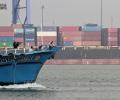
India's exports reached a six-month high, growing by 18 per cent to USD 45.2 billion in May, driven by electronic goods, petroleum products, engineering items, and pharmaceuticals. However, the trade deficit widened to USD 28.21 billion due to a 10 per cent rise in imports, particularly petroleum products and gold, amidst surging crude oil prices.

Indian benchmark indices, Sensex and Nifty, ended marginally lower after recovering from sharp intraday losses, driven by cooling crude oil prices and buying interest in HDFC Bank and IT sector stocks.

Indian benchmark indices, Sensex and Nifty, closed flat on Friday, with elevated crude oil prices due to geopolitical uncertainties and a rebound in US Treasury yields making investors cautious and preventing a decisive market rally.

BRICS finance ministers and central bank governors have called for increased representation of emerging-market and developing economies in the IMF and World Bank, while also criticising unilateral tariffs and trade measures, as the expanded bloc aims to bolster financial cooperation amidst global fragmentation.
Indian benchmark equity indices, Sensex and Nifty, experienced declines in early trade due to elevated crude oil prices and persistent geopolitical uncertainties, particularly following the expiry of the US-Iran ceasefire. Track Sensex, Nifty on August 19, 2026.

Electric commercial vehicle manufacturers in India are struggling to meet localisation requirements under the PM eDRIVE scheme, set to begin on Tuesday. The Society of Indian Automobile Manufacturers (Siam) has requested a seven-month extension until April 1, 2027, citing disruptions in the supply of rare earth magnets due to China's export restrictions and geopolitical tensions. The government is yet to decide on the request, which aims to prevent production disruptions and allow time for local supply chain development.

New photographic evidence and a Pentagon inspector general's report confirm extensive damage to US military installations across the Middle East due to Iranian missile and drone strikes. The report details billions in financial costs, structural losses to hundreds of buildings, and damage to dozens of aircraft, contradicting previous assertions about US military readiness and ordnance stockpiles. The conflict also led to disruptions in the Strait of Hormuz, impacting global oil prices.

South African President Cyril Ramaphosa on Friday described BRICS as an important global forum, highlighting the grouping's growing demographic and economic weight and noting that its members account for around half of the world's population and 40 percent of global GDP.

A new report by Motilal Oswal Financial Services Ltd (MOFSL) indicates that inflation, interest rates, and monetary policy have become more significant drivers of gold prices than traditional geopolitical conflicts, with markets increasingly focusing on these economic factors.

Analysts predict that crude oil prices, geopolitical tensions in West Asia, and upcoming inflation data will be the primary drivers of the Indian stock market this week, alongside foreign investor activity and domestic quarterly earnings.

Indian benchmark indices, Sensex and Nifty, saw declines in early trade, influenced by rising crude oil prices and ongoing geopolitical tensions in West Asia. Experts suggest that crude oil remains a primary concern, with Brent holding near USD 88 a barrel due to renewed US warnings against Iran, embedding a geopolitical risk premium in energy markets. Track Sensex, Nifty

Indian benchmark indices Sensex and Nifty rallied nearly 1 per cent, driven by optimism over easing geopolitical tensions in the Middle East and fresh foreign fund inflows, with the Sensex gaining over 500 points.

Foreign portfolio investors (FPIs) have injected Rs 30,919 crore into Indian equities in August, marking their second consecutive month of net buying. This follows a Rs 20,200 crore investment in July, indicating a potential reversal after four months of significant outflows, driven by improving corporate earnings, resilient economic activity, and a stable rupee.

Gautam Adani emphasised the importance of energy security and digital infrastructure in shaping geopolitical power, urging India to develop sovereign capabilities across the AI value chain.

Nasscom President Rajesh Nambiar highlights India's growing importance as a technology partner due to geopolitical uncertainties and the need for resilient supply chains.
Indian markets on Dalal Street rallied sharply as easing tensions in the US-Iran conflict and stable oil prices boosted sentiment. Track Nifty 50 and BSE Sensex performance and key global triggers.

IBS Group has launched Naviq Technology, an artificial intelligence company dedicated to the global travel industry, backed by a substantial USD 500 million investment over the next five years. The new venture aims to partner with major travel players to drive business transformations, modernise operations, and leverage AI for new revenue streams, with plans for significant job creation in India.

Prime Minister Narendra Modi has highlighted the risks posed by the 'weaponisation' of resources and strategic sea routes, urging India to achieve greater self-reliance in energy to mitigate vulnerabilities to overseas supplies and geopolitical tensions.

The 18th BRICS Summit got underway in New Delhi with leaders of partner countries gathering in the capital to discuss the changing global economic and geopolitical landscape.
Foreign Portfolio Investors (FPIs) have withdrawn Rs 19,837 crore from Indian equities in the first two trading sessions of April, extending a significant selling trend from March, driven by geopolitical uncertainty, rising crude oil prices, and a depreciating rupee.

The benchmark Sensex plummeted 813 points to a three-month low, with the Nifty settling below 23,450, as escalating tensions in West Asia drove crude oil prices above USD 100 per barrel, leading to widespread selling in IT, FMCG, financial services, and oil & gas shares.

Analysts predict that crude oil prices and the ongoing US-Iran conflict will be the primary drivers of stock market movements, with investors also closely watching the Jackson Hole symposium for cues on interest rates.

Moody's Ratings has sharply increased India's GDP growth forecast for fiscal 2026-27 to 7 per cent, making it the fastest among G20 economies, driven by economic resilience despite the Middle East conflict. However, the agency flagged significant inflation risks stemming from elevated oil prices and potential El Nino disruptions.
